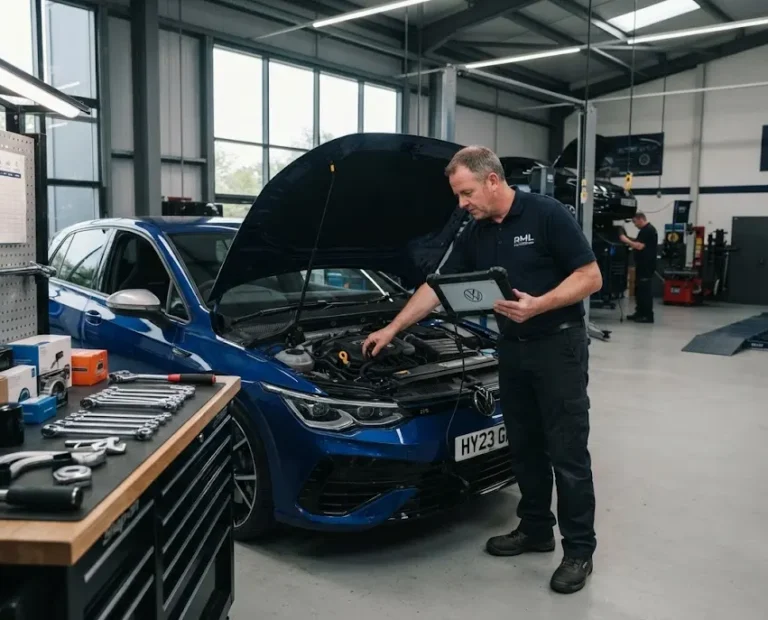
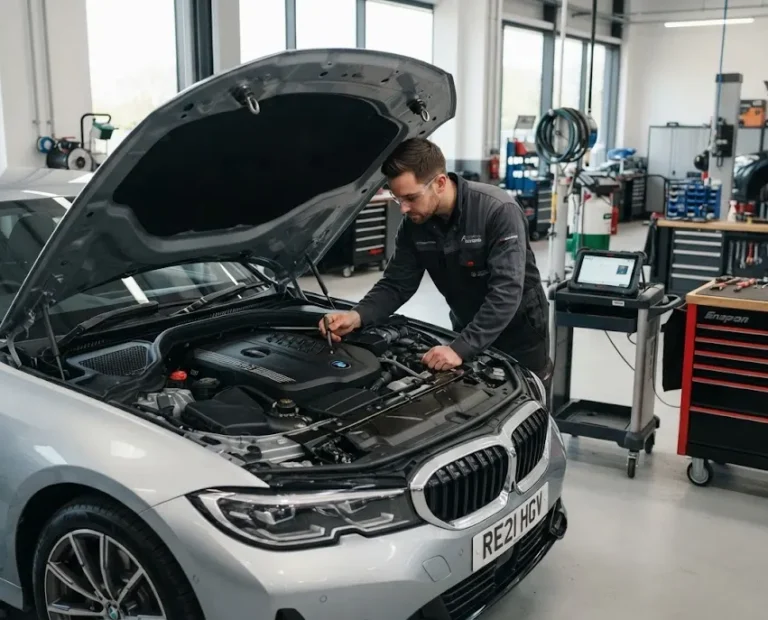
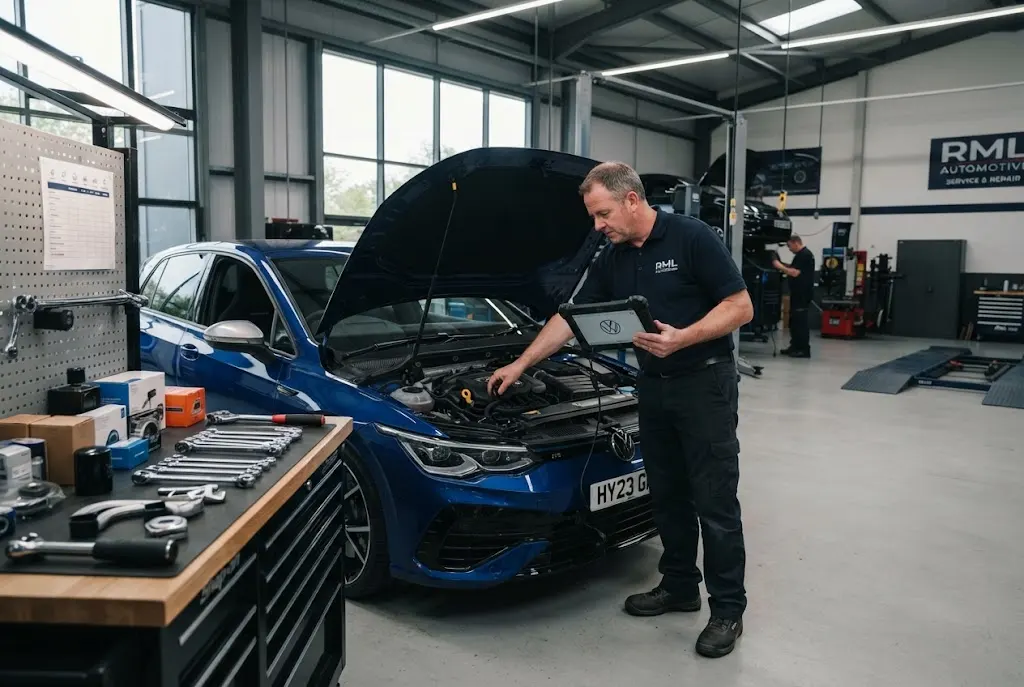
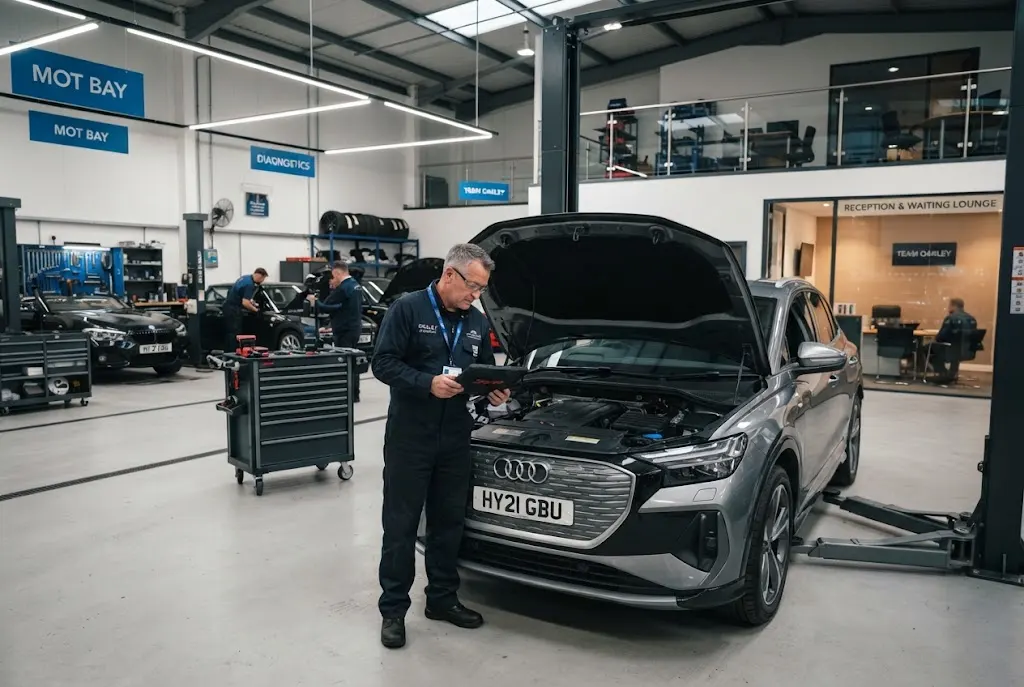
Garage chains play an important role in the UK automotive service market, offering motorists access to tyres, MOT testing, servicing, repairs, brakes, batteries and other maintenance services through established service networks. Major names such as Kwik Fit, Halfords, National Tyres & Autocare, ATS Euromaster and Protyre compete alongside thousands of independent garages, creating a highly fragmented and increasingly competitive market.
For customers, the choice is no longer limited to finding the nearest workshop. Drivers can compare prices, reviews, booking options, service coverage and specialist capabilities before choosing a provider. At the same time, garage chains are adapting their business strategies around convenience, digital booking, fleet relationships, mobile services and emerging vehicle technologies.
How Garage Chains Compete in the UK
The UK garage market combines large national operators, regional networks, authorised workshops and independent businesses. This structure makes competition particularly diverse. A national chain may have the advantage of brand recognition and a broad network, while an independent garage may compete through personal service, local reputation and specialist knowledge.
Government guidance on the property market for vehicle repair businesses has historically highlighted the fragmented nature of the sector and the willingness of larger operators to acquire smaller chains or secure prominent locations. The same guidance also points to the importance of site visibility and accessibility for operators. UK government guidance on vehicle repair workshops provides useful background on the structure of this market.
Modern competition, however, extends well beyond physical locations. Online visibility, digital booking, pricing transparency and customer reviews have become important parts of the customer journey. Recent industry benchmarking also shows that major UK tyre and servicing brands are actively competing for digital visibility and online customer demand.
Major Garage Chains and Service Networks
Several established brands have developed substantial service networks across the UK. Their exact propositions differ, but most compete across overlapping categories such as tyres, MOTs, servicing and vehicle repairs.
Kwik Fit
Kwik Fit is one of the best-known names in the UK fast-fit sector. Its proposition has historically centred on tyres, exhausts, brakes, MOTs and servicing, supported by a large national branch network.
The strength of a business such as Kwik Fit is not simply its number of locations. A broad network can make the brand convenient for motorists who value accessibility, while national scale can support standardised processes, purchasing power and marketing reach.
However, scale also creates expectations. Customers increasingly expect consistent service quality regardless of which branch they visit. This makes operational consistency an important part of the competitive strategy for large garage chains.
Halfords
Halfords has expanded its position in vehicle servicing through its motoring services operation, combining physical garages with mobile services and other customer-facing channels. The company identifies the ageing UK car parc, increasing mileage and demand for convenience as important market drivers. It also highlights opportunities associated with EV servicing and fleet customers.
This broader model demonstrates how garage chains can compete by offering customers more than traditional workshop visits. Mobile services, online booking and membership-style propositions can create additional touchpoints throughout the vehicle ownership cycle.
National Tyres & Autocare
National Tyres & Autocare has a strong focus on fast-fit automotive maintenance. Its services include tyres, exhausts, brakes, batteries, MOT testing, safety inspections and car servicing. The company is also part of the Halfords family and operates within a wider network of automotive service locations.
This relationship illustrates another important feature of the market: consolidation can allow established groups to combine complementary brands, locations and capabilities while maintaining different customer propositions.
ATS Euromaster
ATS Euromaster is another established name within the UK automotive service sector, with a strong heritage in tyres and vehicle maintenance. Its position also demonstrates how service networks can develop around both consumer and commercial requirements.
Fleet servicing is particularly important because business customers often need dependable maintenance arrangements across multiple vehicles and locations. A national or regional network can therefore offer an advantage where customers value consistency and coverage.
Protyre
Protyre operates through a substantial UK network and competes across tyres, servicing and related automotive maintenance. Like other large operators, its network model allows it to combine local workshop access with a recognisable brand and broader service capabilities.
Recent industry research includes Protyre among the major UK tyre and servicing brands being assessed for digital visibility, alongside Kwik Fit, Halfords, ATS Euromaster and National Tyre & Autocare.
Fix Auto
Fix Auto represents a somewhat different approach to the traditional fast-fit model because its network is strongly associated with vehicle body repair and collision repair. This highlights an important point when analysing garage chains: not every network competes for exactly the same customer need.
Some networks specialise in routine maintenance, while others focus on tyres, diagnostics, body repair, accident repair or specialist mechanical work. Their competitive positions should therefore be assessed according to their service mix rather than simply their branch count.
Garage Chains vs Independent Garages
Independent garages remain an important part of the UK automotive aftermarket. The market is highly fragmented, with large numbers of businesses operating independently or through smaller regional networks. Even major chains therefore compete against a much wider field than the most recognisable national brands.
Independent garages can have several advantages. Local reputation, repeat customers, personal relationships and specialist knowledge can help them compete effectively in their communities. They may also be able to make decisions quickly without the layers of standardisation found within larger organisations.
Garage chains, on the other hand, can benefit from national advertising, purchasing scale, established booking systems, wider service networks and stronger brand recognition. Their challenge is to turn these structural advantages into consistently positive customer experiences.
This distinction is important when considering automotive service companies more broadly. The market is not simply a competition between large and small workshops. It includes independents, authorised workshops, specialist operators, national chains and technology-enabled service platforms.
The Role of Digital Competition
Digital marketing has become an increasingly important part of garage chain competition. Before booking a service, motorists can search for nearby workshops, compare prices, read reviews and check appointment availability from a phone or computer.
This changes the value of a physical network. A branch may be convenient, but customers may never visit it if the business has poor local search visibility or an awkward booking process.
For this reason, service networks increasingly need strong local landing pages, accurate business information, online booking, useful service content and credible customer reviews. Digital performance can influence whether a physical workshop is considered in the first place.
The competitive environment is also visible in paid search. Current UK automotive service market analysis tracks major brands and platforms competing for online advertising visibility, demonstrating how customer acquisition increasingly extends beyond traditional roadside and local advertising.
Why Service Quality Matters for Garage Chains
Large networks can attract customers through convenience and brand awareness, but retaining those customers depends heavily on service quality. Automotive maintenance involves trust because customers often rely on technicians to identify safety-related problems and recommend necessary work.
Consistency is therefore a major strategic challenge. A customer who receives excellent service at one branch may expect the same standard at another location. Chains need effective training, quality controls, transparent communication and clear operating procedures to maintain that confidence.
For customers, useful indicators can include transparent pricing, clear explanations of recommended work, written estimates, warranty information, technician qualifications and independent reviews. These factors can be more meaningful than brand size alone.
How Garage Chains Are Adapting to Changing Vehicles
The vehicle parc is changing, and garage chains must adapt their technical capabilities accordingly. Hybrid and electric vehicles require technicians to understand different systems, diagnostic procedures and safety considerations.
For example, UK government guidance for MOT testers explains that hybrid and electric vehicles can contain high-voltage systems, with some systems operating between 350 and 600 volts. It also sets out precautions around high-voltage components and wiring.
This makes investment in equipment, training and technical expertise increasingly important for service networks. The shift does not mean conventional servicing disappears immediately. Instead, garages are likely to handle a mixed vehicle parc for many years, requiring capabilities across petrol, diesel, hybrid and electric technologies.
For a deeper look at this transition, related research into hybrid servicing and EV servicing can help explain how workshop requirements are changing.
What Industry Competition Means for Customers
Competition between garage chains can create practical benefits for motorists. Businesses have incentives to improve convenience, expand service offerings, strengthen online booking and compete on value.
At the same time, customers should avoid assuming that the largest network is automatically the best option for every repair. A specialist independent workshop may be better suited to a particular vehicle or complex repair, while a national chain may offer greater convenience for routine maintenance.
The right choice depends on the vehicle, required service, location, price, availability and confidence in the workshop.
Future Outlook for UK Garage Chains
The future of garage chains is likely to be shaped by several overlapping developments. Vehicle technology will continue to change, customers will expect increasingly convenient digital experiences, and fleet operators will continue to value service coverage and reliable maintenance arrangements.
National operators are also likely to continue competing with independent garages through network scale, brand recognition and technology. Meanwhile, independent businesses can defend their position through local expertise, personal service and specialist capabilities.
Another important factor is the increasing age of vehicles on UK roads. Halfords identifies the ageing car parc as a driver of demand for maintenance and repair services, while also pointing to growth opportunities in EV servicing and fleet relationships.
As a result, the UK automotive aftermarket is unlikely to become a simple national-chain market. Instead, it will remain a diverse ecosystem in which large garage chains, independent workshops, authorised networks and specialist providers compete for different parts of customer demand.
Conclusion
Garage chains remain a significant force in the UK automotive service market, but their success depends on more than having a large number of branches. Kwik Fit, Halfords, National Tyres & Autocare, ATS Euromaster, Protyre and networks such as Fix Auto illustrate different approaches to building scale and competing for customers.
The strongest service networks will need to combine accessibility with service quality, digital convenience, technical expertise and customer trust. At the same time, independent garages will continue to play an important role because of their local relationships and specialist capabilities.
As vehicles become more technologically advanced, the competitive landscape will continue to evolve. Garage chains that invest in technician skills, diagnostics, digital services and new vehicle technologies will be better positioned to serve motorists through the next phase of UK mobility.