Vehicle repair costs can vary considerably depending on the fault, vehicle, parts required, labour time and garage carrying out the work. For UK drivers, understanding what influences a repair bill can make unexpected maintenance expenses easier to assess and plan for. While there is no single price for a particular type of repair, looking at the main components of automotive costs provides useful context.
What Determines Vehicle Repair Costs?
The final price of a repair is generally influenced by a combination of technical and commercial factors. The underlying problem determines what needs to be investigated and repaired, while the vehicle itself can affect how difficult the job is to complete.
Common factors include:
- The type and severity of the fault.
- The time required to diagnose the problem.
- The labour rate charged by the workshop.
- The price and availability of replacement parts.
- The vehicle’s design and accessibility of components.
- Whether specialist diagnostic equipment is required.
- Whether additional faults are discovered during inspection.
- The type and quality of replacement components selected.
This means two vehicles experiencing what appears to be a similar problem can still generate very different repair bills.
Labour Costs and Workshop Time
Labour costs are an important part of most repair invoices. Garages need to account for the time technicians spend diagnosing, dismantling, repairing, reassembling and testing a vehicle.
The amount of labour required can vary substantially even within the same category of repair. A component that is easy to access may take relatively little time to replace, while another component buried behind multiple systems can require considerably more work.
Workshop labour rates can also differ according to location, facilities, technician expertise and the type of vehicle being serviced. Specialist garages may charge different rates from general repair workshops because of the equipment, training and expertise required for particular vehicles.
A higher labour rate does not automatically mean that a repair is poor value, just as a low labour rate does not guarantee that the final cost will be lower. The relevant comparison is the total work being provided and the quality of the repair.
Why Spare Parts Affect Repair Prices
Spare parts can represent a substantial proportion of a repair bill. Prices vary according to the component, manufacturer, availability, vehicle model and whether the part is original equipment, aftermarket or another suitable replacement.
Some components are relatively inexpensive, while complex electronic or mechanical assemblies can cost significantly more. Parts availability can also affect how quickly a vehicle can be repaired.
Drivers should ask what type of replacement part is being proposed when comparing repair quotations. A quotation based on one type of component may not be directly comparable with another quotation using a different specification.
The appropriate part also depends on the vehicle and repair. A professional garage should be able to explain what is being fitted and why it is suitable for the vehicle.
Diagnostic Work Is Part of the Repair Process
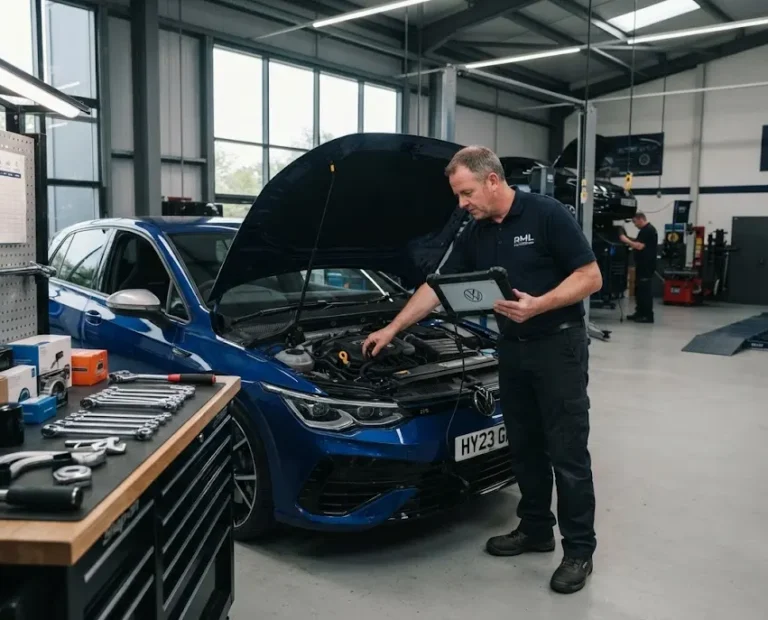
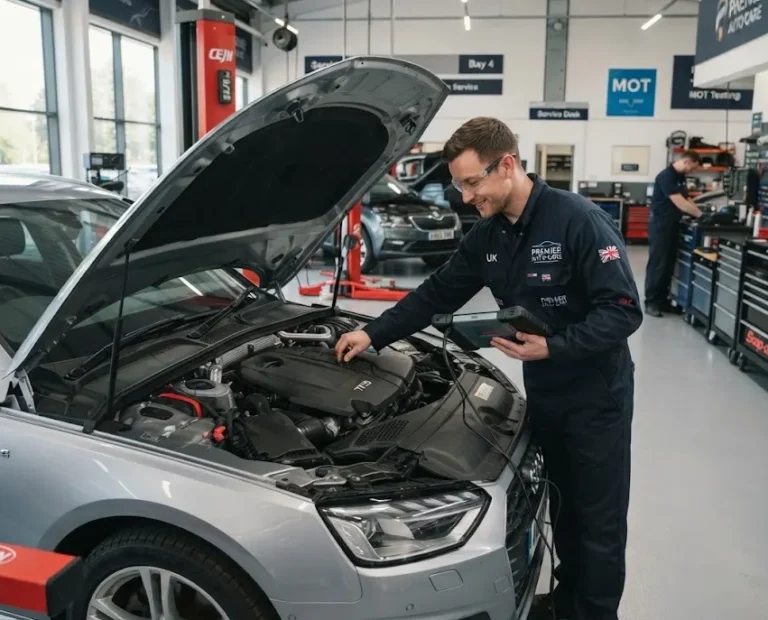
Modern vehicles can require diagnostic investigation before a repair can be accurately identified. Warning lights and electronic fault codes can provide useful information, but they do not always identify the precise mechanical cause of a problem on their own.
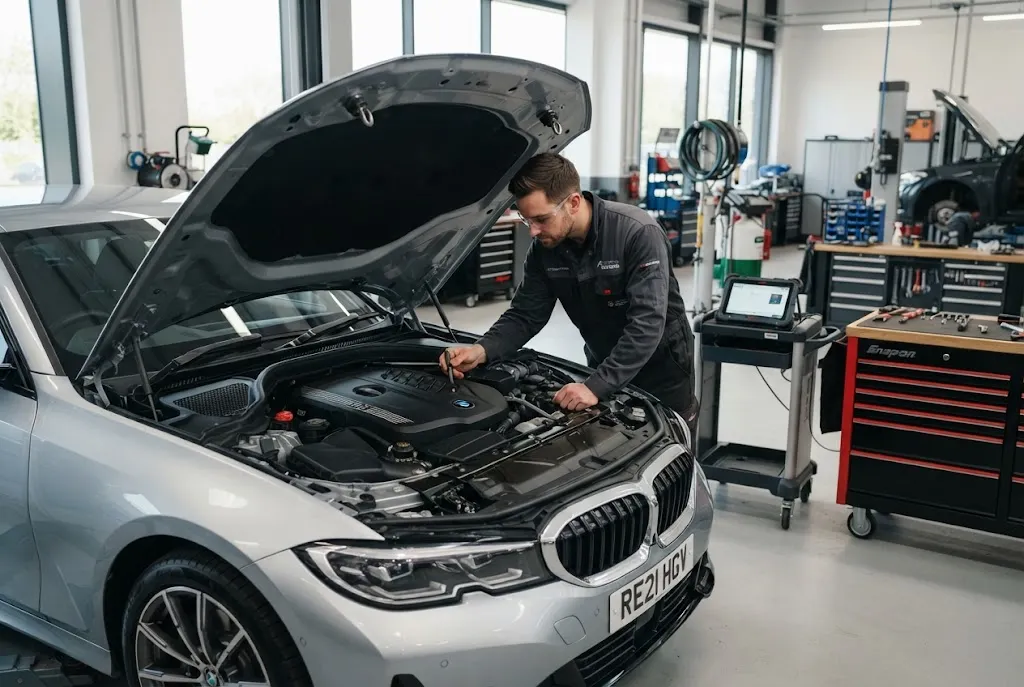
Technicians may therefore need to combine diagnostic equipment with physical inspection and testing. This investigative work takes time and forms part of the overall repair process.
Drivers sometimes see diagnostic charges as a separate expense and may question why they are necessary. However, accurate diagnosis can help prevent unnecessary parts replacement and reduce the risk of addressing the wrong problem.
Our guide to professional garage services explains why workshop expertise, diagnostic equipment, repair quality and clear communication all matter when choosing where to have a vehicle repaired.
Servicing Prices Versus Repair Expenses
It is useful to distinguish between routine servicing prices and unexpected repair expenses. A scheduled service is generally planned maintenance carried out according to the vehicle manufacturer’s requirements. A repair responds to a fault or component that requires attention.
Routine servicing can involve predictable items such as inspections, fluid checks and specified replacement components. Repairs can be more difficult to budget because the underlying fault may not be known until the vehicle is inspected.
This distinction is important when considering the total cost of ownership. A driver who budgets only for scheduled servicing may still need to maintain a separate reserve for unexpected repairs.
For a broader look at why consistent maintenance matters, our guide to vehicle maintenance and long-term ownership examines preventive maintenance, maintenance planning and lifecycle management.
How Inflation Can Influence Automotive Costs
Inflation can affect several components of vehicle repair costs. Rising business expenses can influence workshop operating costs, while changes in manufacturing, transport and supply chains can affect parts prices.
Not every repair price will move at the same rate, and individual components can experience different pricing pressures. Availability can also influence the cost of certain parts.
For drivers, this makes historical price comparisons less straightforward. A repair that cost a particular amount several years ago cannot necessarily be used as a reliable benchmark for today’s market without considering changes in labour, parts and operating costs.
This is one reason service plans can appeal to some motorists. Depending on the provider and terms, a plan may establish a fixed price for specified scheduled servicing. However, as explained in our guide to car service plans, the actual coverage and exclusions need to be examined before comparing costs.
Why Vehicle Age Can Affect Repair Economics
Vehicle age can influence repair decisions because components naturally experience wear over time. Older vehicles may also require attention to several systems during the same period.
This does not mean an older car is automatically uneconomical to maintain. A vehicle’s condition, mileage, maintenance history and expected future requirements all matter.
For example, an owner may reasonably approve a significant repair on an otherwise well-maintained vehicle that is expected to remain in use for several more years. Another owner may reach a different conclusion if the vehicle has multiple unrelated issues and substantial additional work is anticipated.
The key is to consider the repair within the context of the vehicle’s overall condition rather than looking at one invoice in isolation.
Understanding the Difference Between Price and Value
A repair quotation should not be assessed on price alone. Cost analysis should also consider what is included in the work, the quality of the parts, the workshop’s expertise and the expected outcome.
A very low quotation may omit diagnostic work, use a different specification of part or exclude necessary follow-up work. A higher quotation may include more comprehensive work or components with different characteristics.
This does not mean an expensive quotation is necessarily better. Instead, customers should compare quotations on an equivalent basis.
Useful questions include:
- What fault has been diagnosed?
- Which parts need replacing?
- What type of parts will be used?
- How much labour is expected?
- Is diagnostic work included?
- Are there additional charges or consumables?
- Is the quoted amount fixed or an estimate?
- What warranty or guarantee applies to the work?
Ownership Budgeting for Unexpected Repairs
Ownership budgeting should account for both predictable and unpredictable vehicle expenses. Insurance, fuel, tax, servicing and routine maintenance can often be planned in advance, but repairs are more difficult to forecast.
One practical approach is to treat repairs as a separate category within the overall vehicle budget. This avoids assuming that every pound allocated to servicing will cover every future mechanical problem.
Drivers can also use their maintenance history to identify recurring expenses. If a vehicle is approaching a major service interval or has components that are known to require attention based on its age and mileage, these potential costs can be incorporated into future planning.
This approach can make ownership less reactive. Instead of treating every repair as an unexpected financial event, owners can recognise that vehicle maintenance is an ongoing part of keeping a car on the road.
Repair Costs and Preventive Maintenance
There is an important relationship between preventive maintenance and repair expenses. Routine servicing cannot prevent every mechanical failure, but it provides opportunities to identify worn components and address maintenance requirements before they become more disruptive.
A professional inspection may identify a component that needs attention even though the vehicle remains driveable. In some situations, dealing with that issue during a planned maintenance visit can be easier to budget for than waiting until a failure occurs.
However, drivers should avoid assuming that every recommended repair is urgent. A good garage should explain the condition of the component, the potential consequences of delaying the work and the appropriate timeframe for addressing it.
Why Repair Estimates Can Change
A repair estimate may change after a technician has dismantled a component or investigated the vehicle more thoroughly. The initial inspection may identify a likely cause, but further examination can reveal associated damage or additional work.
This is why customers should understand whether a quotation is an estimate or an agreed price and what the garage’s process is if additional work becomes necessary.
Clear communication is especially important in these situations. Customers should have an opportunity to understand and approve significant additional work before it is carried out, subject to the terms agreed with the garage.
Keeping communication open can prevent disputes and make the repair process more predictable for both the workshop and vehicle owner.
How Modern Technology Is Changing Repair Costs
Vehicle technology is changing the economics of repairs. Modern cars can contain sophisticated electronics, sensors, driver-assistance systems and computer-controlled components.
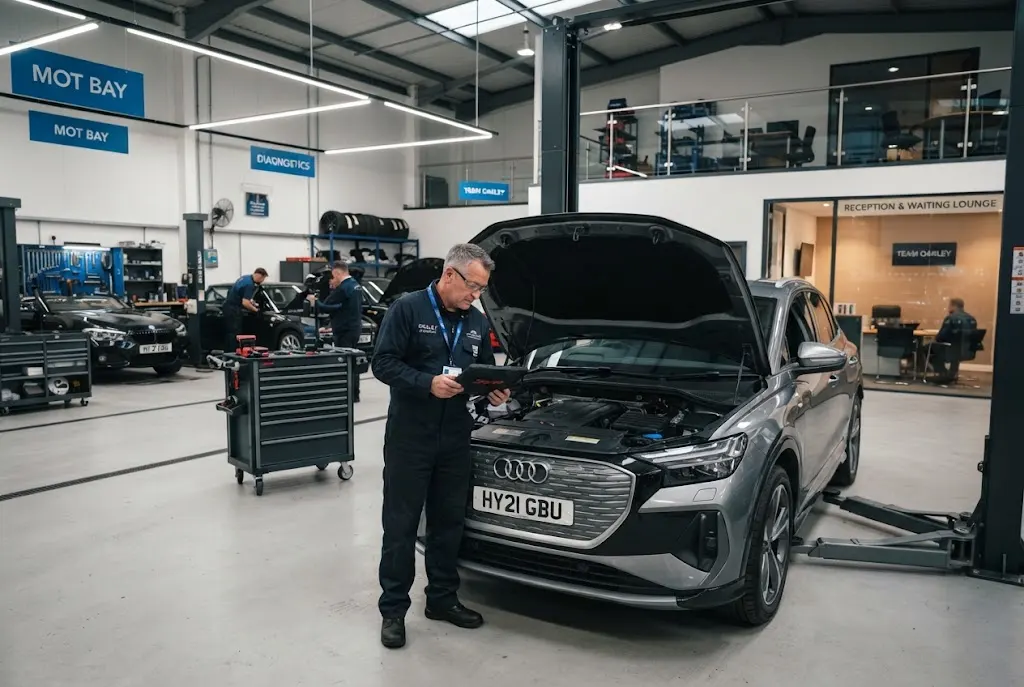
This can make diagnosis more specialised than it was on older vehicles. Workshops may need additional diagnostic equipment and technicians may require ongoing training to work effectively with newer systems.
At the same time, digital workshop systems can improve administration, inspection reporting and customer communication. The result is not necessarily lower repair costs, but potentially a more structured process for identifying and managing repair work.
The broader changes affecting modern workshops are discussed in our article on the future of the auto service garage, including workshop automation, digital services and maintenance technology.
Getting a Repair Quotation
When a vehicle requires significant work, obtaining a clear quotation can help the owner understand the likely expense before authorising repairs.
For more complex problems, comparing quotations from suitable garages may also be useful. The comparison should focus on equivalent work rather than simply choosing the smallest number.
Drivers should provide the garage with accurate information about symptoms and vehicle history. This can help the technician begin the diagnostic process with more useful context.
It is also sensible to ask about the expected repair timeframe, availability of parts and whether the garage anticipates any related work.
When a Repair Becomes a Larger Ownership Decision
Occasionally, a repair bill becomes large enough that the owner starts questioning whether to keep the vehicle. This is fundamentally an ownership decision rather than simply a repair-price question.
The decision can involve the vehicle’s current value, condition, maintenance history, expected future repairs and how well it meets the owner’s needs. A single expensive repair does not necessarily mean a vehicle should be replaced, just as a relatively inexpensive repair does not guarantee that future costs will remain low.
Looking at the vehicle’s wider lifecycle can provide better context. This is particularly relevant for older cars where several components may be approaching the end of their useful service life.
Making Sense of Vehicle Repair Costs
Vehicle repair costs reflect more than the price of a replacement part. Labour, diagnosis, vehicle complexity, parts availability, workshop expertise and wider economic conditions can all influence the final bill.
For drivers, the most useful approach is to understand what the quotation covers and compare equivalent repair work when seeking alternatives. Clear communication with the garage can also make it easier to distinguish urgent repairs from work that can be planned.
Long-term maintenance planning remains equally important. Regular servicing can help owners understand their vehicle’s condition and anticipate some future requirements, while a separate repair budget can provide protection against unexpected expenses.
As vehicle technology continues to evolve, repair work will also change. Modern diagnostics, specialised training and digital workshop systems are becoming increasingly important, while the fundamentals of good repair work remain the same: accurate diagnosis, appropriate parts, skilled labour and clear communication.
Understanding these factors does not eliminate the cost of vehicle ownership, but it can make repair decisions more informed and budgeting more realistic.