Road safety is usually discussed after something goes wrong: a collision, a failed MOT, a roadside breakdown. Rethinking road safety means moving the conversation earlier, to the habits, inspections and maintenance that prevent problems in the first place. This guide looks at road safety as a system: vehicle condition, driver behaviour, testing and public awareness working together, and what UK drivers can do to make every journey safer.
Road Safety Starts with the Vehicle
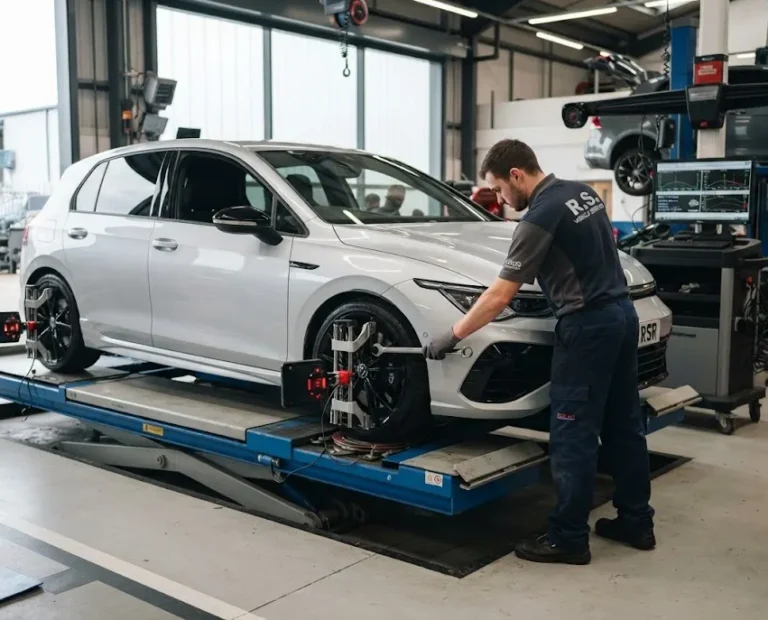
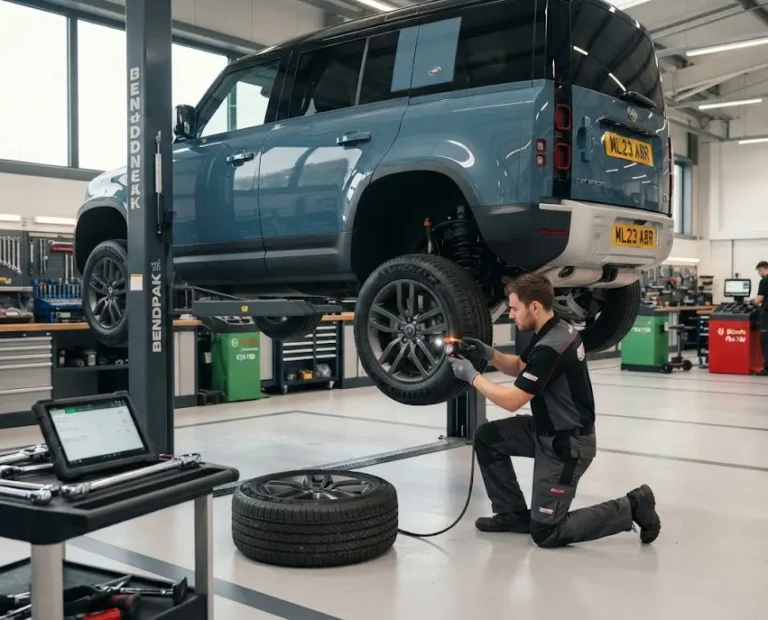
The most basic road safety truth is also the most overlooked: a car in poor condition is a danger whatever its driver does. Tyres with low tread, worn brakes, faulty lights and tired suspension all increase stopping distances and reduce control, especially in wet or dark conditions. Regular inspections catch these problems before they cause harm, which is why preventive maintenance is a safety measure, not merely a mechanical one.
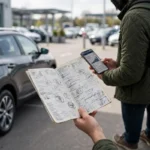
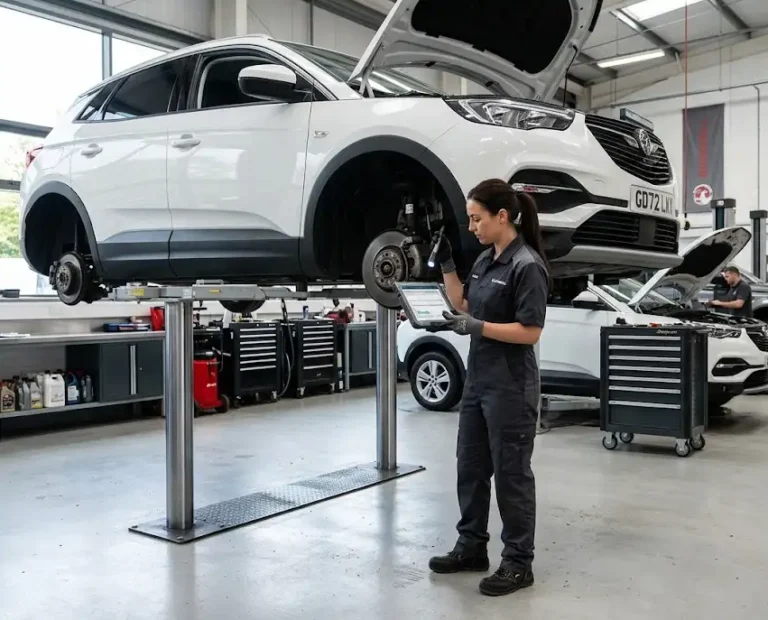
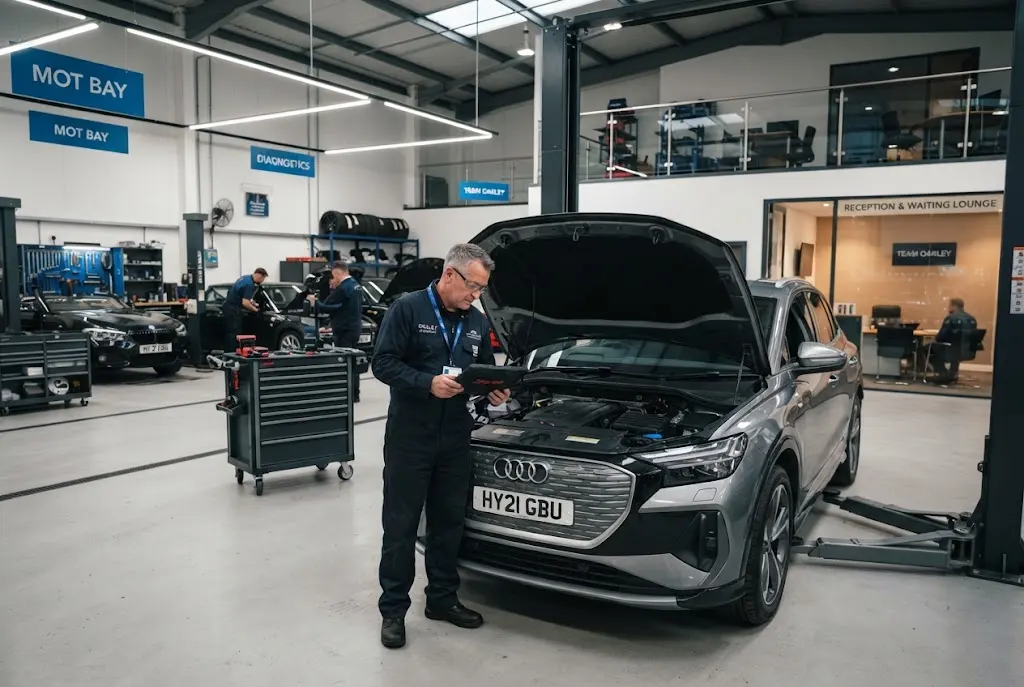
Drivers can do much of this checking themselves. A monthly walk around the car, checking tyre tread and pressure, lights, wipers and fluid levels, takes minutes and reveals most developing problems. Professional inspections add depth: a trained mechanic can spot worn components, leaks and corrosion that an untrained eye misses. Our guide to auto inspection services explains what a thorough inspection covers, and vehicle maintenance sets out the routine checks that keep a car safe between services.
MOT Testing and Vehicle Compliance
The MOT test is the UK’s formal road safety checkpoint. Every car over three years old must pass an annual test of its roadworthiness, covering brakes, steering, suspension, lights, tyres, exhaust and body condition. The test is not a service, and passing it does not mean a car is in perfect condition, but it does catch dangerous defects that might otherwise go unnoticed.
Treating the MOT as a deadline to dread is a mistake. Drivers who maintain their cars through the year usually pass with little drama, while drivers who ignore maintenance often face failures, advisories and repair bills. The smarter approach is to think of the MOT as a yearly audit of habits formed all year round. Our guide to MOT and service explains how testing and servicing fit together, and why combining them in your annual routine makes sense.
Driver Behaviour: The Human Side of Road Safety
Vehicles matter, but driver behaviour matters more. Speed, distraction, fatigue and impairment remain leading contributors to collisions, and no amount of vehicle technology fully compensates for them. Rethinking road safety means taking behaviour as seriously as mechanics: keeping a safe following distance, adjusting speed to conditions rather than limits alone, putting the phone away, and never driving when tired or impaired.
Behaviour also includes how drivers respond to their cars. Warning lights, unusual noises and changes in handling are information, not annoyances, and acting on them promptly is a safety habit. A driver who treats a warning light as a reason to book a garage visit, rather than a reason to hope it goes away, is practising road safety in its most practical form. Similarly, planning journeys to avoid fatigue, allowing extra time in bad weather, and knowing when not to drive at all are all safety decisions.
Preventive Maintenance as a Safety Strategy
Preventive maintenance is road safety in slow motion. Regular car servicing keeps brakes, steering and suspension in good order. Timely tyre replacement maintains grip. Fresh fluids keep systems working as designed. None of this is dramatic, and that is the point: safety is mostly the accumulation of unglamorous habits, performed consistently.
Cost is sometimes given as a reason to delay maintenance, but delay rarely saves money. A worn brake pad left too long damages the disc. A small leak left unchecked becomes a large repair. And a car that fails its MOT on a neglected item costs more in retests and repairs than the maintenance would have cost. Our guide to car service costs explains what drives garage bills, and auto care services covers how regular care keeps costs predictable. For drivers who need help quickly, mobile auto service can bring maintenance to the home or workplace, removing the excuse of inconvenience.
Public Awareness and Shared Responsibility
Road safety is also a shared responsibility. Drivers share roads with pedestrians, cyclists, motorcyclists and other drivers, and safety improves when everyone anticipates each other. That means giving cyclists room, watching for pedestrians at junctions, being patient with learner drivers and large vehicles, and remembering that a road is a shared space rather than a personal racetrack.
Public awareness campaigns, school education and clear signage all play their part, but the most effective awareness is personal: the habit of expecting the unexpected. A child stepping from behind a parked car, a cyclist in a blind spot, a sudden stop ahead — these are the moments that test a driver’s attention. Rethinking road safety means training yourself to expect them, not merely to react to them.
Technology and the Future of Road Safety
Vehicle technology is changing road safety rapidly. Driver assistance systems, automatic emergency braking, lane-keeping aids and connected diagnostics all help, and future developments promise more. But technology assists rather than replaces the driver, and over-reliance on it creates its own risks. A driver who trusts a system beyond its limits is less safe, not more.
The wisest approach to safety technology is to understand what each system does and does not do, keep it maintained, and never let it substitute for attention. Our overview of auto services tracks how workshops and technology are evolving together. The future of road safety will involve smarter cars, but it will still depend on careful drivers in well-maintained vehicles.
Rethinking Road Safety: The Bottom Line
Rethinking road safety means moving from reaction to prevention: maintaining your car, respecting the MOT, driving with attention, and sharing the road with consideration. None of these habits is difficult, and together they make a measurable difference.
Start with the simplest steps: check your car monthly, service it on schedule, act on warnings promptly, and drive as though other people’s safety depends on you, because it does. Road safety is not a single action or a single test. It is a habit, practised every journey, and every driver can practise it better starting today.