Understanding MOT and service requirements is an important part of responsible vehicle ownership in the UK. Although an MOT test and a routine service are connected to vehicle maintenance, they serve different purposes. The MOT focuses on whether specified parts of a vehicle meet legal standards at the time of testing, while servicing is primarily concerned with maintaining the vehicle and addressing mechanical or maintenance needs.
For drivers, knowing the difference can make maintenance planning much easier. It also helps vehicle owners understand their ownership responsibilities, prepare for annual inspections and respond appropriately when testing standards or regulatory requirements change.
What Does MOT and Service Actually Mean?
An MOT is a legally required test for eligible vehicles once they reach the applicable age requirement. The purpose of the test is to check specified items against roadworthiness and environmental standards. The Driver and Vehicle Standards Agency (DVSA) explains that the MOT contributes to the government’s road safety strategy by ensuring qualifying vehicles are checked at least annually.
A service is different. It is maintenance carried out according to the vehicle manufacturer’s schedule or the vehicle’s condition. Depending on the vehicle and service interval, this can include checking or replacing fluids, filters, brakes, tyres and other components.
The distinction matters because passing an MOT does not mean a vehicle has received a complete mechanical service. DVSA guidance specifically notes that the MOT record relates to testable items at the time of the test and should not be treated as evidence of the vehicle’s general mechanical condition.
How MOT Testing Standards Work
MOT testing standards are based on official inspection requirements. During the test, specific components are assessed according to the relevant MOT inspection manual. For cars and passenger vehicles, areas covered include brakes, steering, visibility, lamps, electrical equipment, wheels, tyres, suspension, body structure and emissions.
The test is essentially an inspection of defined testable items rather than a complete mechanical examination. For example, GOV.UK states that the MOT does not cover the condition of the engine, clutch or gearbox. This is one reason why regular servicing remains important even when a vehicle has recently passed its MOT.
Drivers can review the official GOV.UK MOT test guidance to understand what the test covers and what it does not.
Why Annual Inspections Matter
For vehicles that require an MOT, the annual inspection provides an important compliance checkpoint. It gives motorists a formal assessment of specified safety and environmental items against the standards applicable at the time of testing.
However, vehicle condition can change between MOT tests. Tyres can wear, lights can fail, brakes can deteriorate and warning lights can appear at any point during the year. Consequently, vehicle owners should not treat an MOT certificate as a replacement for regular maintenance.
This is where maintenance planning becomes useful. Drivers can schedule servicing separately from their MOT appointment or coordinate the two where appropriate. The important point is to understand that they fulfil different functions.
MOT and Service: The Key Difference
The easiest way to understand the relationship between an MOT and servicing is to think of them as two parts of vehicle care rather than interchangeable activities.
- MOT: Checks specified vehicle components against legal testing standards.
- Service: Maintains the vehicle according to manufacturer recommendations and its condition.
- MOT result: Records whether the vehicle passed or failed the applicable test.
- Service history: Records maintenance and work carried out on the vehicle.
- Roadworthiness: Requires ongoing attention rather than relying solely on an annual test.
This distinction is particularly useful when buying a used vehicle. A strong MOT history can provide useful information about previous test results and recorded mileage, but it does not automatically establish that the vehicle has been consistently maintained.
Recent DVSA Regulatory Updates
MOT requirements and testing procedures can evolve over time. The DVSA regularly publishes updates to its testing guidance, inspection manuals and special notices for testing stations.
In 2026, several changes have affected the MOT testing system. For example, DVSA updated its MOT testing guide in August 2026, including amendments relating to designated councils, taxis and private hire vehicles. Earlier changes also updated quality-control requirements for authorised examiners.
Another 2026 development concerns zero-emission goods vehicles. From 1 June 2026, zero-emission goods vehicles with a design gross weight between 3,501kg and 4,250kg became class 7 vehicles and therefore require a class 7 MOT test. This illustrates how changes in vehicle technology can lead to corresponding changes in testing arrangements.
DVSA has also introduced changes to the MOT testing process itself. A new feature began rolling out from 3 August 2026 that allows participating MOT testers to take and upload a photograph of the vehicle during its test. The first phase covered around 2,500 garages across Great Britain.
These examples demonstrate why motorists, testing stations and automotive professionals should check current DVSA guidance rather than relying solely on older information.
Vehicle Compliance and Road Safety
Vehicle compliance is not simply about obtaining an MOT certificate. Drivers remain responsible for keeping their vehicles in a condition that is safe and legal to use between inspections.
Basic checks can help identify issues before they become more serious. Tyre condition, tyre pressures, lights, windscreen visibility, fluid levels and dashboard warning lights are all areas that motorists can monitor regularly.
Regular servicing can complement these checks by providing a more detailed assessment of maintenance requirements. When a technician identifies a developing issue, addressing it early may help reduce the likelihood of a more significant mechanical problem later.
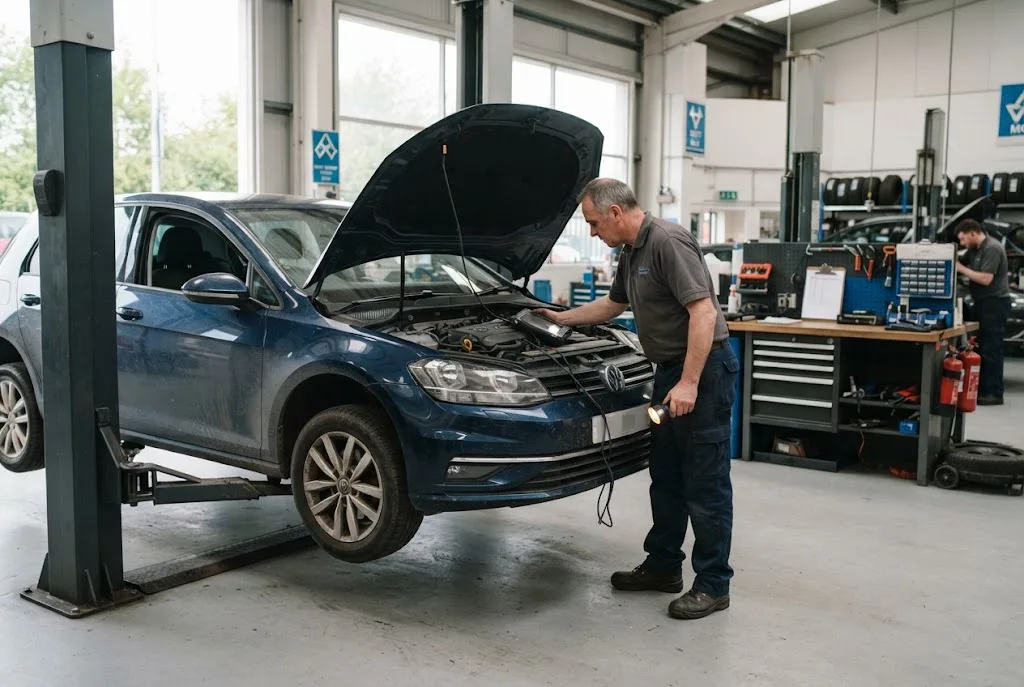
Drivers who want a broader understanding of professional vehicle checking can also explore auto inspection services, particularly when buying a used vehicle or investigating an unfamiliar fault.
Maintenance Planning Around an MOT
Good maintenance planning can make the MOT process less stressful. Instead of waiting until the day before an MOT to discover potential problems, motorists can maintain their vehicles throughout the year and address known issues as they arise.
A practical approach is to keep a simple maintenance record containing the date and mileage of servicing, repairs, tyre replacement, brake work and other significant maintenance. This information can help establish when future work may be due.
It can also be useful to review the manufacturer’s recommended maintenance schedule. Some maintenance items are based on mileage, while others are based on time. Following the appropriate schedule helps prevent the annual MOT from becoming the only occasion when the vehicle receives professional attention.
What Happens If a Vehicle Fails Its MOT?
A failed MOT means that one or more items did not meet the applicable testing requirements. The next step depends on the defects recorded and the circumstances surrounding the retest.
Drivers should read the MOT result carefully and discuss the listed defects with a qualified technician if repairs are required. The appropriate repair should address the specific problem rather than simply treating the MOT result as a general indication that the vehicle needs a service.
It is also important to understand the terminology used in MOT results. Defects can be classified according to their severity, and the classification determines how the test result is recorded.
How MOT Standards Are Changing With Modern Vehicles
Vehicle technology continues to develop, and testing standards must accommodate new vehicle designs and systems. Modern cars can contain advanced electronic controls, driver-assistance technologies, sophisticated braking systems and increasingly complex electrical architecture.
DVSA’s 2026 training material for MOT testers includes areas such as lamps and electrical equipment, braking requirements and detailed inspection-manual topics. The inspection manual itself also receives periodic amendments to clarify testing procedures and requirements.
These updates reinforce the importance of using current technical guidance. A testing rule or procedure that applied several years ago may not accurately describe today’s MOT environment.
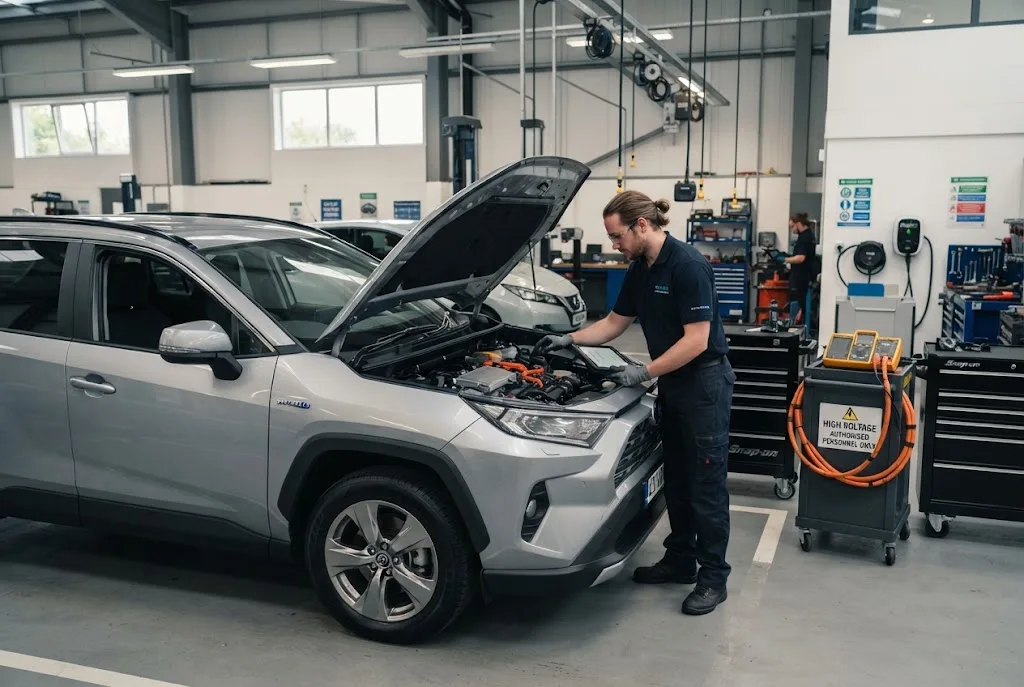
The wider automotive industry is also moving towards electrification. Drivers interested in how changing vehicle technology affects maintenance can explore hybrid services and the emerging requirements associated with hybrid and electric vehicles.
Preparing for an MOT Without Overlooking Servicing
Before an MOT, drivers can carry out straightforward checks such as confirming that all exterior lights operate, tyres appear to be in suitable condition, the windscreen and wipers are clear and functional, and the vehicle displays no obvious warning signs.
These checks do not guarantee an MOT pass because the official test covers many items that require specialist inspection. They can, however, help motorists identify obvious issues before presenting the vehicle for testing.
For vehicles approaching their scheduled service interval, combining maintenance planning with MOT preparation may also make financial and practical sense. Drivers can discuss both requirements with their garage while keeping the distinction between an MOT test and a service clear.
Why Staying Current With Regulatory Updates Matters
UK MOT rules are supported by detailed technical guidance that is updated as testing procedures, vehicle technology and regulatory requirements develop. The DVSA maintains official MOT manuals, inspection guidance and special notices for testing stations.
For motorists, the practical lesson is straightforward: check current information when an important change affects your vehicle rather than relying on outdated advice. For automotive businesses, staying current is even more important because testing standards directly affect how inspections are conducted.
Understanding MOT and service requirements ultimately helps drivers approach vehicle ownership more responsibly. An MOT provides an important legal and safety checkpoint, while servicing supports ongoing vehicle maintenance. Keeping both responsibilities in view can improve maintenance planning, support vehicle compliance and help motorists make better-informed decisions throughout the year.