A city break should feel like a holiday from the moment you leave the house, and nothing undermines that faster than dragging an overstuffed suitcase across a station platform. Learning how to pack for a city break properly means travelling light without feeling unprepared: everything you need, nothing you do not, and a bag you can carry up two flights of hotel stairs without regret. This guide covers the method experienced travellers use, from choosing the bag to the final check before you zip it shut.
Start With the Right Bag
For a two or three night break, a cabin-sized case or a good travel backpack is usually enough. A smaller bag forces better decisions, fits overhead lockers and saves the cost and wait of checked luggage. Choose a bag with a wide opening so you can see everything at once, and if you walk a lot at your destination, wheels that handle cobbles and kerbs are worth more than extra pockets.
Weight matters as much as size. Airlines weigh cabin bags more often than they used to, and a heavy case eats your allowance before you have packed a single shirt. If your bag itself weighs more than about a fifth of the allowance, consider a lighter one. The same principle of travelling efficiently applies at home too — our car service plans guide makes a similar case for planning small, regular costs instead of absorbing big ones unexpectedly.
Build a Capsule Wardrobe for the Trip
The heart of knowing how to pack for a city break is choosing clothes that all work together. Pick a simple colour palette — two neutrals and one accent is a reliable formula — and every top should match every bottom. That way three tops and two bottoms produce six outfits from five items, which is more than enough for a long weekend.
Wear your bulkiest items on the journey: boots, coat and your heaviest jumper travel on you, not in the bag. Plan one outfit per day plus one spare top, and choose fabrics that resist creasing and can be rinsed in a sink if needed. A single versatile layer handles most weather surprises better than three specialist items, a lesson our sustainable beauty guide applies to products as well: fewer, better-chosen things outperform a shelf of single-use ones.
Use the Roll and Cube Method
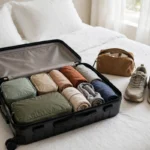
How you pack matters as much as what you pack. Rolling soft clothes tightly saves space and reduces creases, while folding structured items like blazers flat keeps their shape. Packing cubes take this further: one cube for tops, one for bottoms, one for underwear and sleepwear. They compress as they organise, and unpacking becomes a two-minute job instead of an explosion across the hotel bed.
Fill every gap. Shoes swallow socks and chargers, the space inside a hat holds gloves, and the corners of the case take belts and cables. Put heavy items at the bottom of the bag near the wheels so it stands upright and pulls easily. If you are the kind of traveller who likes systems, our guide to choosing an online course uses the same thinking for learning: a structure decided once, in advance, removes daily friction.
Toiletries and the Small Essentials
Decant toiletries into small travel bottles rather than carrying full sizes, and keep them in a clear resealable bag where airport security can see them. Most city hotels provide basics, so carry only what you personally rely on — our beauty self care guide has a realistic shortlist of rituals that survive a busy schedule and a small washbag alike.
Beyond toiletries, a short essentials list covers most city break situations: phone charger and a small power bank, any medication in hand luggage, a reusable water bottle, a compact umbrella, and a tote or day bag for carrying purchases and layers during the day. Photograph your passport and bookings on your phone, and keep a note of your hotel address offline for the journey from the station.
Pack for the Journey Home
Experienced packers leave deliberate space — roughly a fifth of the bag — for the return trip. City breaks produce souvenirs, gifts and occasionally a market find you cannot leave behind, and a bag packed to bursting on day one becomes a wrestling match on day three. Wearing the bulkiest items again on the way home preserves that space.
It also helps to separate laundry as you go. A simple laundry bag or spare packing cube keeps worn clothes away from clean ones, so the bag stays pleasant and unpacking at home takes minutes. If your break involves driving at either end, our road safety guide is a useful refresher on the checks worth making before a longer journey.
What to Leave Behind
Knowing how to pack for a city break is as much about exclusion as inclusion. The most common mistakes are “just in case” items: a second pair of formal shoes, a full-size towel, three books, and an outfit for a restaurant you have not booked. Each one costs space, weight and attention, and almost none of them get used. If an item does not serve two purposes or match the actual itinerary, it stays at home.
Valuables deserve the same discipline. Expensive jewellery, spare bank cards and anything irreplaceable are safer at home than in a hotel room, and most travellers find they relax more without them. The one exception to travelling light is anything tied to health or the journey itself — medication, chargers and documents always earn their space, because replacing them mid-trip ranges from expensive to impossible. When in doubt, ask whether you could buy or borrow the item at your destination for a few pounds. If the answer is yes and the risk is low, leave it behind.
A Simple Packing Checklist
Before you close the bag, run through the essentials once: documents and phone, chargers, medication, one outfit per day plus a spare top, layers for the forecast, comfortable walking shoes worn or packed, toiletries in a clear bag, and space left for the journey home. If everything on that list is in and the bag still closes easily, you have packed well.
Packing light is a skill that improves with every trip, because you learn which items you genuinely use. Keep a short note after each break of what you never wore — that list is the most personal packing advice you will ever get, and it makes the next city break easier still.