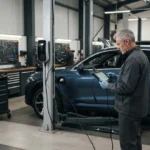
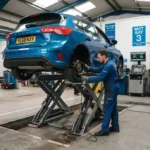
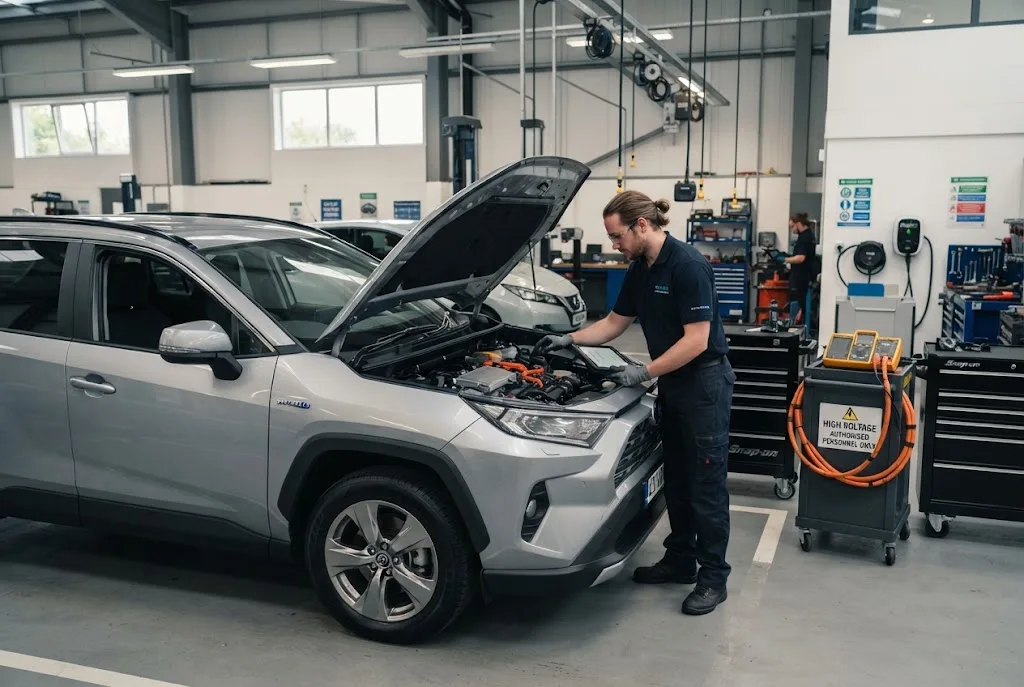
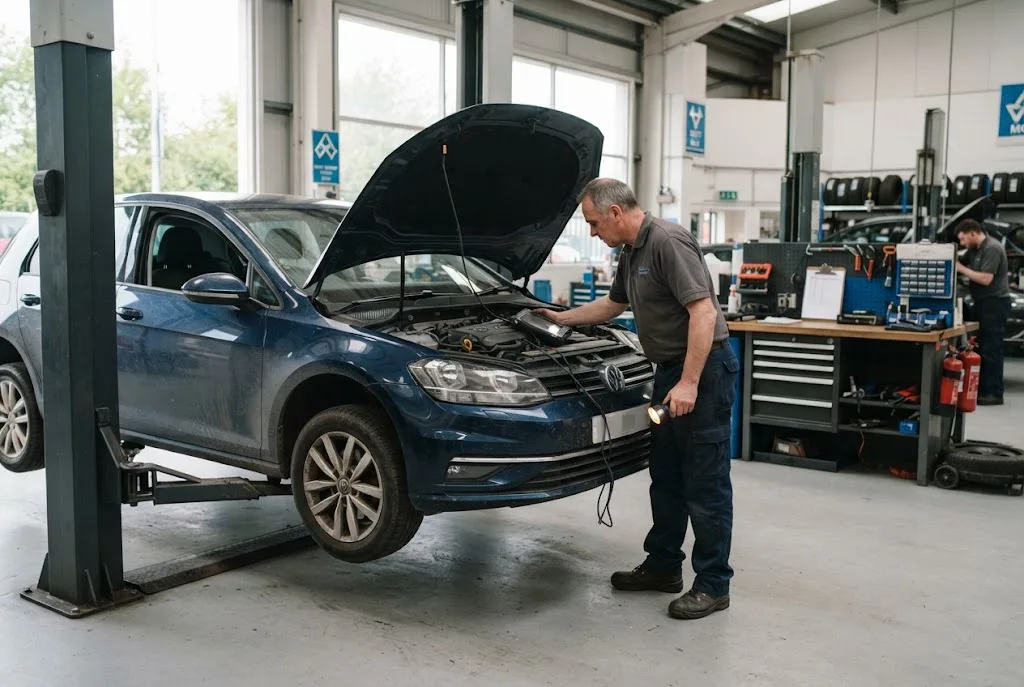
EV servicing is becoming an increasingly important part of vehicle maintenance in the UK as more drivers switch from petrol and diesel cars to battery electric vehicles. Electric cars have fewer conventional moving parts, but they still require regular inspections, software checks, brake maintenance, tyre care and specialist attention to electrical systems.
For EV owners, choosing the right workshop is particularly important when work involves high-voltage components or the traction battery. A suitable service provider should have the necessary equipment, training and procedures for the vehicle being maintained. Understanding what an electric car service involves can help owners make better decisions about maintenance, repairs and long-term ownership.
What Is EV Servicing?
EV servicing involves inspecting and maintaining the systems that allow an electric vehicle to operate safely and efficiently. Unlike a petrol or diesel vehicle, an EV does not have a conventional combustion engine, engine oil or exhaust system. However, it still contains many components that require regular inspection.
Depending on the vehicle and manufacturer schedule, an EV service can include checks of the high-voltage electrical system, battery condition, charging equipment, braking system, tyres, suspension, steering, cooling systems, cabin filters and software.
The exact maintenance schedule varies between manufacturers and models. Owners should therefore use the vehicle handbook and manufacturer’s service information rather than assuming that every electric car requires the same maintenance routine.
Why EV Servicing Matters
Electric vehicles may require less routine mechanical maintenance than combustion-engine vehicles, but that does not mean they are maintenance-free. Safety-critical components such as tyres, brakes, steering and suspension still need inspection.
The electrical system also requires specialist attention. Government MOT guidance states that propulsion batteries in electric and hybrid vehicles carry high voltage and require additional care during inspection. It also warns that damaged high-voltage components and cabling can present a serious electric shock risk.
Regular servicing can help identify problems before they develop into more expensive or potentially unsafe faults. It also provides owners with a documented maintenance history, which can be useful when the vehicle is sold or transferred.
What Do EV Mechanics Check?
EV mechanics may inspect a combination of conventional vehicle components and electric-specific systems.
High-voltage electrical systems
Electric vehicles use high-voltage systems to deliver energy from the traction battery to the electric motor. Depending on the vehicle, technicians may inspect relevant wiring, connectors, insulation, electrical components and diagnostic information.
These systems require appropriate procedures and equipment. UK government guidance for professionals working with electric vehicles notes that high-voltage systems create hazards different from those associated with internal combustion engines and require suitable training.
Battery condition
The traction battery is one of the most important components in an EV. A service may include checks related to battery condition, diagnostic data, thermal management and visible signs of damage where appropriate.
Battery degradation does not necessarily mean that an entire battery pack needs immediate replacement. Diagnosis should establish the nature and extent of the problem before repair decisions are made.
Brakes
EVs commonly use regenerative braking, which converts some kinetic energy into electrical energy during deceleration. Because regenerative braking can reduce the use of friction brakes in certain driving conditions, brake components may experience a different wear pattern from those on conventional vehicles.
However, brake pads, discs, callipers and related components still require appropriate inspection. Brake maintenance remains an important part of vehicle safety.
Tyres
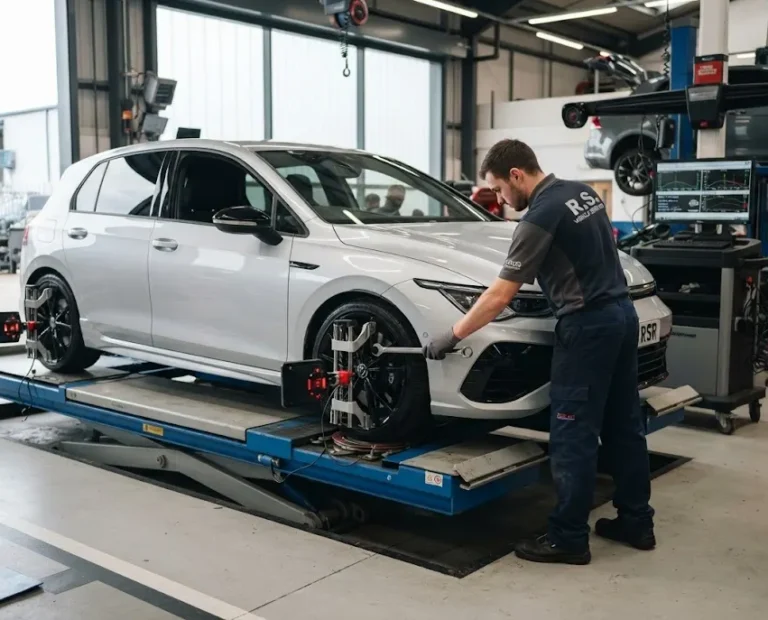
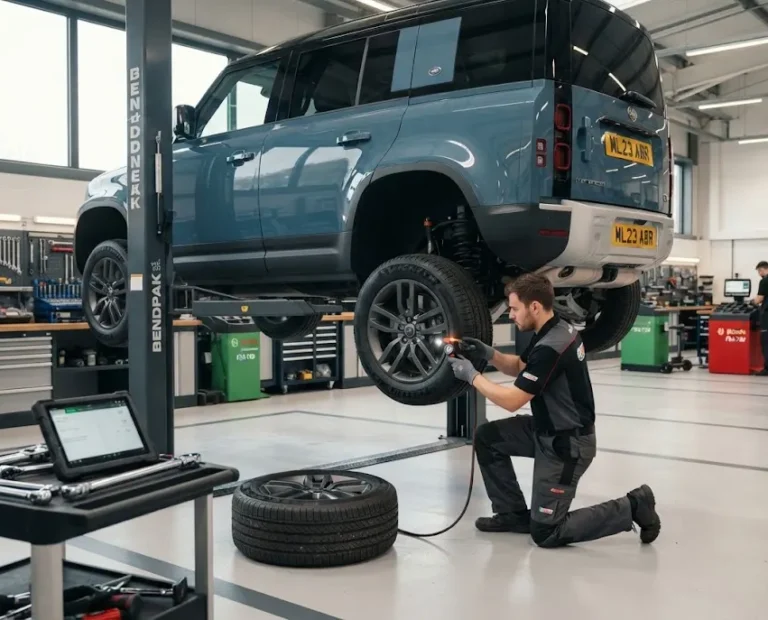
Tyres are particularly important on electric vehicles because battery packs can make many EVs relatively heavy. Correct tyre pressure, tread condition, wheel condition and alignment can all contribute to safe handling.
Uneven tyre wear or steering symptoms may also indicate a need to investigate wheel alignment. Correct wheel geometry can support predictable handling and help prevent premature tyre wear.
EV Battery Servicing and Battery Health
Battery servicing is often one of the biggest concerns for prospective EV owners. The traction battery stores the energy required to power the vehicle, so its condition has a direct relationship with driving range and overall vehicle performance.
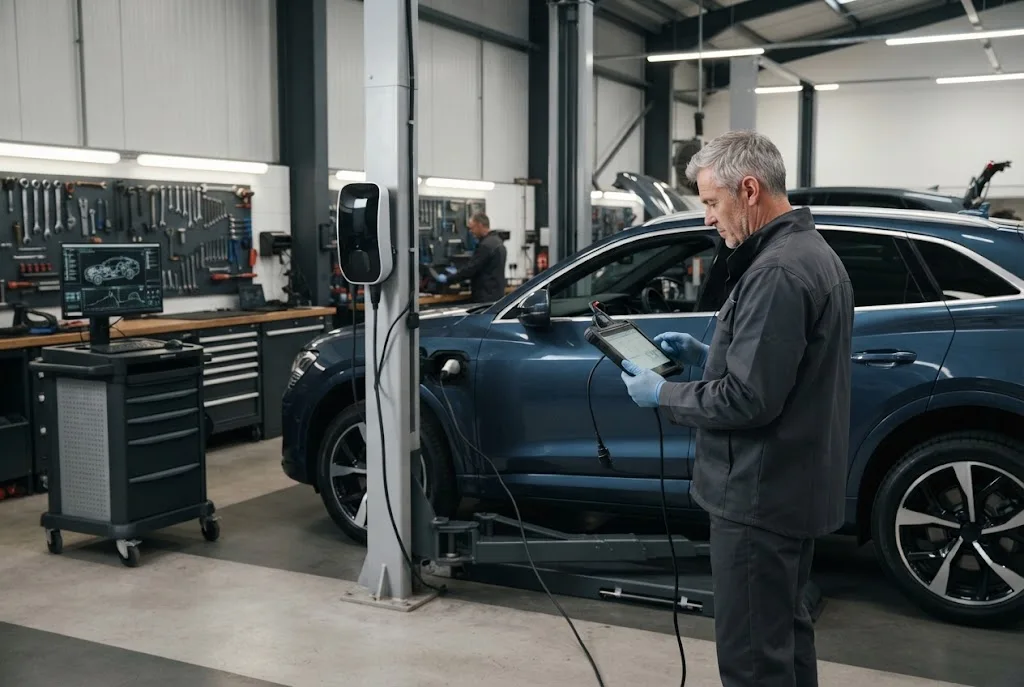
Battery condition can be assessed in different ways depending on the vehicle and diagnostic equipment. Some systems can provide information about battery state, faults and performance characteristics, while specialist testing may be required when degradation or component failure is suspected.
Battery warranties also vary between manufacturers. Current UK government requirements for certain vehicles eligible for the Electric Car Grant include battery and electric drivetrain warranty provisions, illustrating the importance manufacturers place on long-term battery performance.
Owners should check the specific warranty terms for their vehicle rather than assuming that every manufacturer provides identical coverage.
How Often Should an EV Be Serviced?
There is no single service interval that applies to every electric vehicle. Manufacturers set their own schedules, and intervals can differ according to model, battery system, software and intended use.
Some EVs have relatively long service intervals because they have fewer conventional mechanical components. RAC guidance notes that many manufacturers use service schedules based on either time or mileage, while stressing that owners should check the vehicle handbook because requirements vary by model.
This means EV owners should not skip servicing simply because their vehicle has fewer moving parts. Regular inspections remain useful for identifying tyre, brake, suspension, electrical and software-related issues.
EV Servicing vs Traditional Car Servicing
The biggest difference between EV servicing and conventional car servicing is the powertrain.
Petrol and diesel vehicles require maintenance of combustion engines, exhaust systems, engine oil and other components that do not exist in a pure battery electric vehicle. EVs instead depend on electric motors, high-voltage batteries, power electronics and charging systems.
This can reduce the number of routine mechanical maintenance items. However, EV owners still need to maintain tyres, brakes, suspension, steering, lights, windscreen systems and other road-going components.
RAC’s current electric car service guidance highlights battery and electrical-system checks alongside regenerative braking and other EV-specific components.
Charging Infrastructure and Vehicle Maintenance
Charging infrastructure is another important part of EV ownership. Drivers may charge at home, at workplaces or through public charging networks, depending on their circumstances.
A vehicle service may involve checking the charging system or relevant charging equipment, particularly if the vehicle is experiencing charging faults. However, problems with a domestic chargepoint may require an appropriately qualified electrical professional rather than a conventional vehicle mechanic.
UK government specifications for residential chargepoints include technical requirements covering charging equipment, safety, smart functionality and maintenance.
For owners, a charging problem should therefore be diagnosed carefully. The cause could be the vehicle, charging cable, chargepoint, software or electrical supply rather than the traction battery itself.
Finding the Right EV Mechanics
Not every garage has the same level of experience with electric vehicles. Before booking specialist work, owners should ask whether the workshop has technicians trained to work with EV high-voltage systems and whether it has suitable diagnostic equipment.
Useful questions include:
- Does the garage regularly service electric vehicles?
- Are technicians appropriately trained for high-voltage systems?
- Can the workshop perform EV-specific diagnostics?
- Can it inspect the traction battery and related systems?
- Does it follow the manufacturer’s service requirements?
- Can it handle conventional maintenance such as tyres, brakes and suspension?
For routine maintenance, an independent garage with appropriate EV capability may be suitable. For complex electrical or manufacturer-specific repairs, an authorised workshop or specialist EV provider may offer additional technical resources.
This fits within the broader UK market of automotive service companies, where national chains, independent garages and authorised workshops increasingly adapt their services to electric vehicles.
EV Ownership and Routine Maintenance
Good EV ownership involves more than arranging an annual service. Drivers should also monitor basic vehicle condition between professional inspections.
Tyre pressure and tread should be checked regularly, while unusual noises, warning messages, charging problems or changes in vehicle behaviour should not be ignored.
Government guidance reminds motorists that they are responsible for keeping their vehicles roadworthy and recommends regular checks of safety-related components such as brakes, lights and tyres.
Software updates are another consideration for modern electric vehicles. Depending on the manufacturer, software can influence vehicle functions, charging behaviour, energy management and other systems. Owners should follow the manufacturer’s instructions when updates are available.
EV Servicing and High-Voltage Safety
High-voltage safety is one of the most important differences between servicing an EV and maintaining a conventional vehicle. Electric vehicle batteries and associated electrical systems can contain significant amounts of stored energy.
Government guidance for vehicle recovery operators explains that EV high-voltage systems can operate at voltages ranging from 60 volts DC up to 1,500 volts DC and require specific safety considerations. The guidance also stresses that it is not a substitute for appropriate training.
For this reason, vehicle owners should not attempt to repair high-voltage components themselves. Warning lights, suspected battery damage, electrical faults or collision-related concerns should be assessed by appropriately trained professionals.
This is particularly important after an accident. Damage that is not immediately obvious can affect high-voltage components, battery housings or electrical cabling.
EV Maintenance After an Accident
Collision damage can create additional concerns for electric vehicles. The battery pack is often positioned low within the vehicle, and severe impact can potentially affect components that are not visible from outside.
Government guidance for recovery operators highlights the need to assess damaged EVs carefully and warns professionals not to touch high-voltage cabling or components when an electrical hazard is suspected.
After a significant collision, owners should follow the vehicle manufacturer’s safety instructions and use an appropriate recovery or repair provider. A vehicle should not simply be treated as mechanically safe because it can still start or move.
Future of EV Servicing in the UK
The growth of electric vehicle ownership is changing the capabilities expected from automotive workshops. EV mechanics increasingly need knowledge of electrical systems, battery diagnostics, high-voltage safety and vehicle software alongside traditional mechanical skills.
Service networks are therefore likely to continue investing in training and equipment. Independent garages may also develop specialist EV capabilities as the number of electric vehicles entering the used-car market grows.
This transition can create opportunities for businesses that build a strong reputation for EV maintenance. Customers are likely to value workshops that can explain technical problems clearly and demonstrate that technicians have appropriate training.
The change also connects EV servicing with the wider development of hybrid servicing. Both technologies require workshops to understand high-voltage systems, although their powertrains and maintenance requirements are not identical.
Is EV Servicing More Complicated?
EV servicing is different rather than simply more complicated. The absence of an internal combustion engine eliminates some traditional maintenance tasks, but the vehicle introduces high-voltage electrical systems, battery management and additional diagnostic requirements.
For routine ownership, this can mean fewer conventional mechanical service items. For specialist repairs, however, the required equipment and technician training can be more advanced.
The most important factor is therefore not whether a garage is large or small, but whether it has the appropriate capability for the specific work required.
Conclusion
EV servicing is becoming an essential part of the UK’s evolving automotive service market. Electric cars generally have fewer conventional moving parts than petrol and diesel vehicles, but they still require regular maintenance covering brakes, tyres, suspension, steering, charging systems, software and electrical components.
Battery servicing and high-voltage diagnostics require particular care. Government guidance makes clear that EV systems can present hazards that differ from conventional vehicles, meaning specialist training and appropriate procedures are essential for high-voltage work.
For owners, the best approach is to follow the manufacturer’s maintenance schedule and choose a workshop with the right EV equipment and technician training. As electric vehicle ownership grows, capable EV mechanics and specialist service networks will become increasingly important to the UK’s future mobility landscape.